
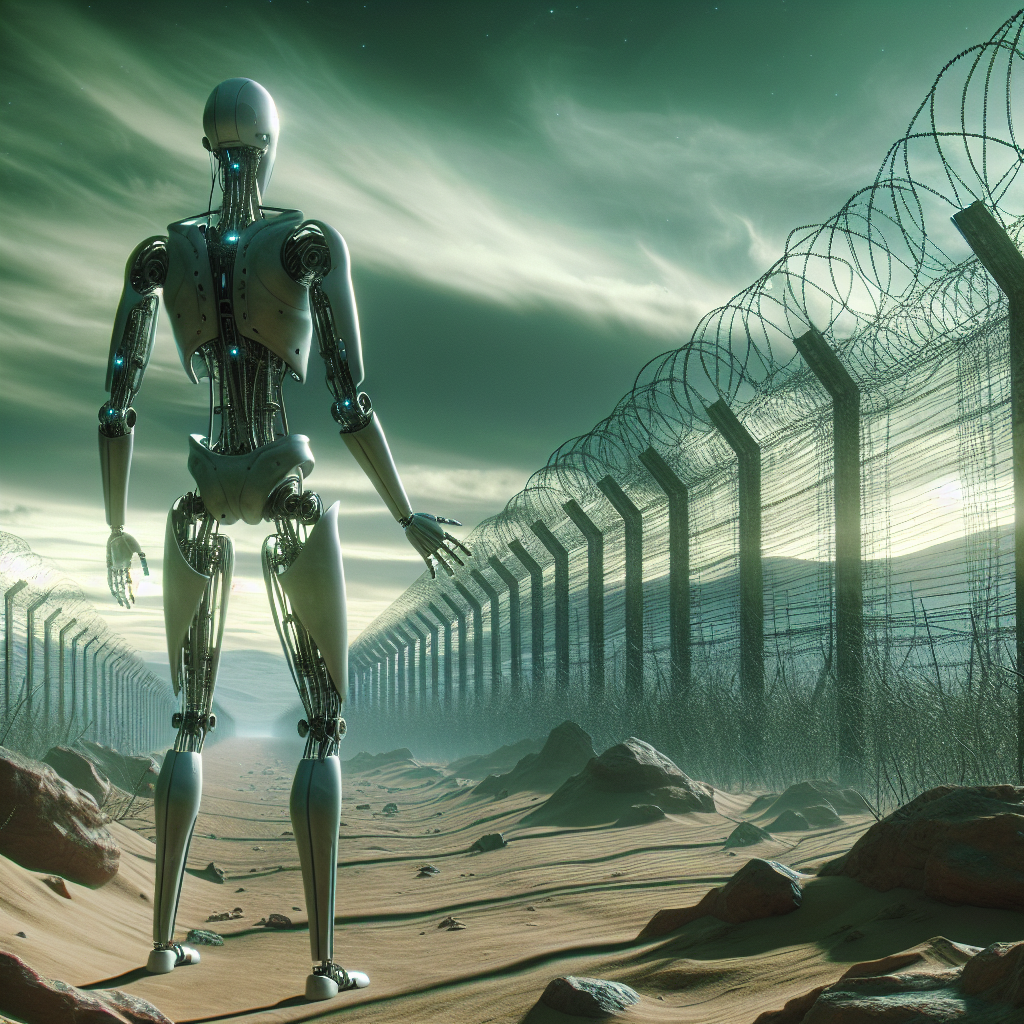
China Deploys Walker S2 Humanoid Robots Along Vietnam Border
In a groundbreaking move that fuses advanced robotics with national security, China has announced plans to deploy Walker S2 humanoid robots along its border with Vietnam. This marks a pivotal step toward smart border management where humans and machines collaborate to enhance surveillance, security, and efficiency.
Meet the Walker S2: A Technological Marvel
The Walker S2 humanoid robot is a next-generation robotic platform developed by Chinese robotics company UBTECH. Engineered to simulate human movement and equipped with a range of interactive AI features, the Walker S2 is designed to operate in dynamic environments, making it ideal for tasks like patrolling rugged or remote terrain.
Some key capabilities of the Walker S2 include:
- Advanced mobility – Walks on two legs with high agility, enabling it to traverse uneven landscapes.
- AI-powered object and person recognition – Can identify and track individuals, assess threats, and relay information in real time.
- Remote operation and autonomous functions – Can function independently or be remotely controlled by human operators.
- Sensory perception – Equipped with multiple cameras and environmental sensors for enhanced situational awareness.
Enhancing Border Patrol and Security
The deployment of the Walker S2 robots along the Vietnam border is part of China’s ambition to leverage AI and robotics to modernize its border patrol system. Traditionally a human-intensive effort, patrolling remote border areas often presents risks and logistical challenges. The introduction of humanoid robots addresses several of these issues.
Key objectives of the deployment include:
- Reducing human workload – Robots will handle routine checks and surveillance, allowing human officers to focus on complex decision-making.
- Boosting efficiency and coverage – Walker S2 units can operate continuously, even in harsh conditions, ensuring more consistent monitoring.
- Improving safety – Minimizes the exposure of border personnel to potentially dangerous encounters or adverse terrain.
Strategic and Technological Implications
This initiative represents more than just a technological experiment—it signals a shift in how nations might approach border security in the coming decade. By fusing AI with robotics, China aims to take a proactive stance in integrating emerging technologies into its administrative and defensive infrastructure.
According to Chinese authorities, the humanoid robots will not operate in isolation; they will work alongside human security personnel in a hybrid policing model. This allows for greater adaptability while retaining human intelligence and oversight in complex scenarios.
Potential Controversies and Diplomatic Consequences
While this move is a notable achievement in robotics and AI, it also raises questions about surveillance, autonomy in security protocols, and international diplomacy. Given that Vietnam shares a sensitive and historically tense border with China, the deployment of semi-autonomous surveillance systems could potentially stir political concerns.
Human rights advocates may also voice skepticism about the use of AI-driven surveillance technology in managing border regions where population movement and cross-border trade are traditionally fluid.
The Future of Smart Border Control
China’s deployment of Walker S2 robots could set a precedent for other countries exploring automated border control solutions. This could lead to a future where AI-powered humanoid robots monitor environments such as:
- Land borders with low population density
- Coastal surveillance checkpoints
- Critical infrastructure zones
Given the rapid evolution of robotic technologies, it’s plausible that these machines could expand their role beyond surveillance to include rescue operations, logistics, and even diplomatic liaison roles in remote outposts.
Final Thoughts
The decision to station Walker S2 humanoid robots on the Vietnam border underscores China’s commitment to integrating cutting-edge technologies into its national security operations. As robots and humans work side-by-side in this unprecedented frontier initiative, the world watches closely, gauging both the technological efficacy and the broader implications of such deployments. Whether this represents a leap forward in national security or ushers in a new era of ethical debates around AI policing remains to be seen.
One thing is clear: the age of robotic border patrol has officially begun.

Leave a Reply