Understanding the Debate: Tesla’s AI Vision vs. Waymo’s LiDAR Approach
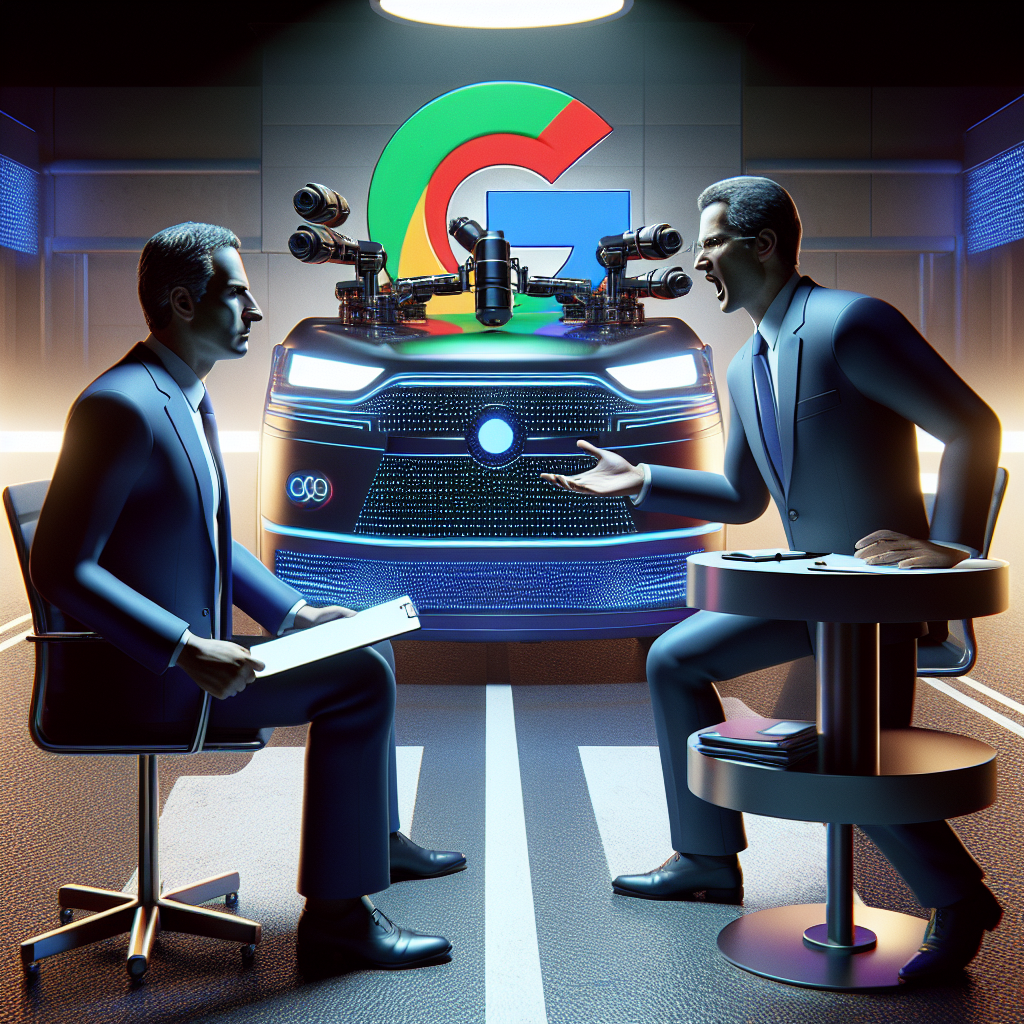
The autonomous vehicle landscape is being shaped by intense innovation and equally intense debates. A recent discussion has thrust two of the most prominent players into the spotlight — Tesla and Google’s Waymo. After Tesla CEO Elon Musk publicly criticized alternate approaches to autonomous driving, ex-Tesla AI Director Andrej Karpathy offered his own insights, shedding light on why he believes Waymo’s strategy may face fundamental limitations.
The Clash of Philosophies: Vision vs. LiDAR
At the core of this high-stakes discussion lies a fundamental philosophical and technical difference:
- Tesla’s Full Self-Driving (FSD) leverages a vision-based system. It uses cameras, neural networks, and AI to mimic human perception and decision-making.
- Waymo relies heavily on LiDAR (Light Detection and Ranging) and pre-mapped routes — a structured framework offering high accuracy and detail in specific environments.
While both models aim to achieve the holy grail of Level 5 autonomy, Karpathy, a key architect behind Tesla’s AI development, argues that Waymo’s approach has fundamental shortcomings that may prevent it from achieving broad scalability.
Andrej Karpathy’s Take: Why Waymo “Cannot Do” What Tesla Is Doing
Speaking out shortly after Elon Musk questioned the efficacy of other autonomous systems, Andrej Karpathy backed Musk with key technical observations. According to Karpathy, Waymo’s reliance on high-definition maps and geofenced areas significantly limits its ability to generalize across different locations.
“Waymo operates great within constrained environments,” he noted, emphasizing that their approach is not scalable to the open-world driving scenario that Tesla is targeting.
Tesla’s FSD, on the other hand, aims for generalized intelligence — a system that can operate in cities, rainy highways, suburban neighborhoods, or mountain roads without relying on prior data. It’s an end-to-end AI model trained on millions of real-world scenarios.
Why This Matters: The Future of Autonomous Driving
Karpathy’s comments come at a pivotal time. With AI becoming increasingly capable thanks to advances in transformer architectures and large vision-language models, the idea of achieving full autonomy through vision-only methods is gaining steam. Here’s why Tesla’s approach may be better positioned for the long run:
- Scalability: Tesla cars can learn from vast amounts of real-world data collected from the fleet already on the roads worldwide.
- Infrastructure Independence: No need for expensive mapping or updating of geofenced areas.
- Resilience: Vision-based models are better at adapting to unpredictable edge cases.
However, critics argue that vision-only systems are still a long way from dependable full autonomy, especially in low-visibility conditions where LiDAR or radar may excel.
The Broader Implications for Autonomous Tech
While Tesla continues to push the envelope with end-to-end neural networks and real-time learning, Waymo’s method offers stability and proven performance — especially in confined geographies like predefined city routes. Their robotaxi services in cities like Phoenix provide a glimpse into what controlled autonomous experiences can look like.
Still, Karpathy’s core argument is about the evolution of AI systems. He contends that Tesla’s method, despite being technically more complex and harder to build, is the only one with the potential to learn how to drive anywhere — not just in pre-mapped locales.
Conclusion: The Road Ahead
Andrej Karpathy’s statement adds weight to Elon Musk’s long-standing claim that Tesla’s vision-based FSD is fundamentally superior to LiDAR-driven alternatives. His experience and deep insight into Tesla’s neural network training pipeline provide valuable context in this race toward autonomy.
Whether Tesla’s flexible, AI-driven path will win out over Waymo’s high-precision but limited map-based model remains to be seen. What’s clear, however, is that the debate reflects larger questions in AI and machine learning: Do we mimic human intelligence, or do we engineer around it?
One thing is certain — the future of autonomous driving is not just about hardware and software, but about the philosophy that underpins their design.

Leave a Reply