
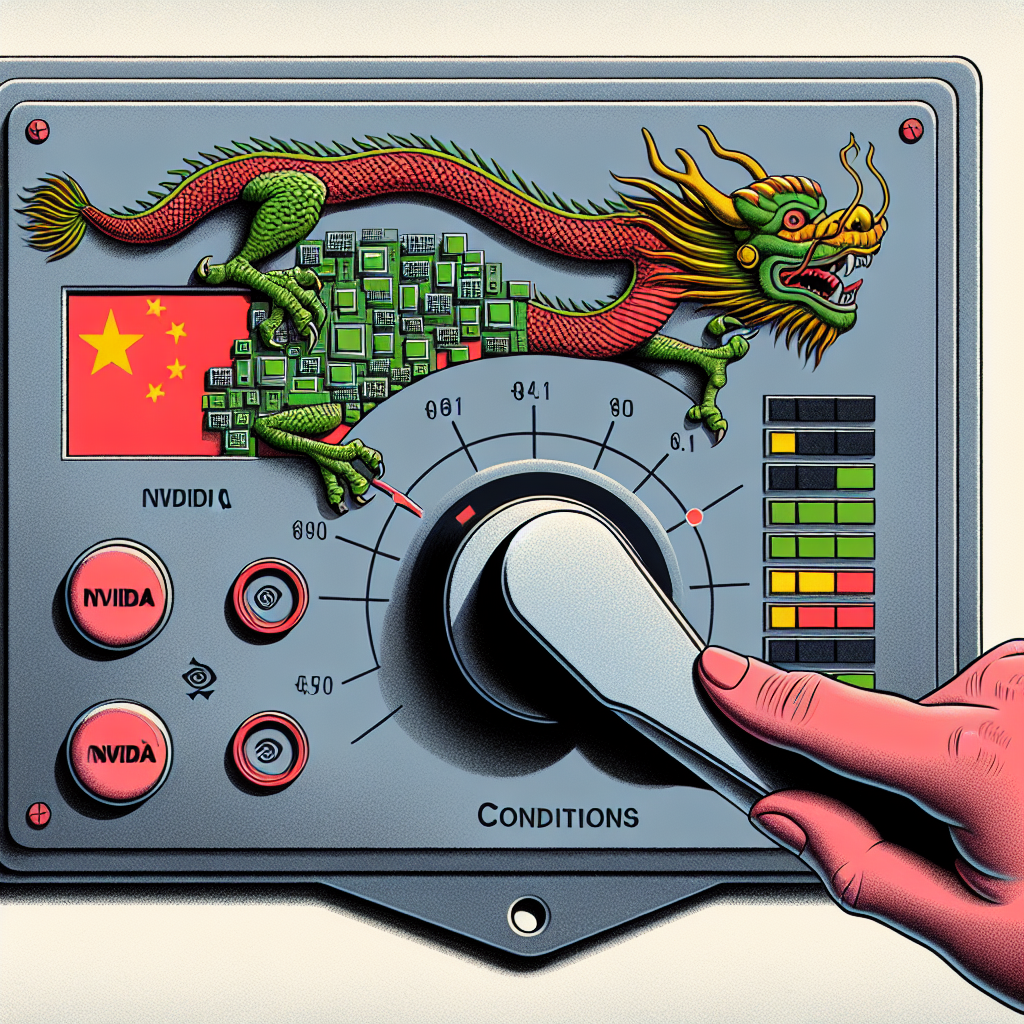
China Tightens Grip on AI Hardware Imports
The Chinese government has recently implemented significant restrictions on the importation of Nvidia’s H200 AI chips, a move that underscores intensifying global tensions surrounding advanced technologies. According to direct sources familiar with China’s internal communications, Beijing has informed select domestic tech companies that access to these high-performance chips will only be granted under “special circumstances.”
What Are Nvidia H200 AI Chips?
Nvidia’s H200 chips are among the latest and most powerful accelerators designed to support advanced artificial intelligence workloads. These chips are particularly prized for training large language models, computer vision, and other deep learning computations that demand high-speed processing and exceptional energy efficiency.
The H200, a successor to Nvidia’s highly sought-after H100, forms the backbone of AI infrastructure for companies and research organizations working on next-gen AI models.
Key Restrictions and Permitted Use Cases
Under the new directive, only specific applications will qualify for exception-based approval to acquire the H200 chip. These include:
- University research labs engaging in non-commercial, academic development of AI tools.
- State-backed R&D initiatives that align with China’s long-term innovation goals.
- Other buyers may need to navigate complex approval processes with uncertain outcomes.
This policy indicates a calibrated, strategic decision rather than a blanket ban, allowing the Chinese government greater oversight on where and how critical AI resources are deployed.
Why Is China Regulating H200 Chip Purchases?
Several reasons contribute to China’s increasingly cautious stance on foreign high-performance AI chips:
- Security and Sovereignty: Beijing has repeatedly emphasized the importance of technological self-sufficiency. Limiting reliance on U.S.-designed hardware is seen as a necessary step to reduce vulnerabilities amid prolonged geopolitical tension.
- Control of Strategic Assets: AI is now seen not just as a commercial asset but as a strategic tool. Controlling its growth and infrastructure helps the government prioritize national objectives over commercial ventures.
- Response to U.S. Export Controls: The move may be a direct response to Washington’s comprehensive export restrictions, which have targeted Nvidia and other U.S. tech firms selling advanced silicon to Chinese businesses.
Impact on Chinese Tech Firms
The restrictions could dramatically reshape the competitive landscape for Chinese companies racing to develop next-generation AI solutions. Firms such as Alibaba Cloud, Tencent, Baidu, and others have already invested in Nvidia’s advanced chips for their data centers and AI cloud services. However, under the new regulation, these companies may face delayed or even denied access to the latest chipsets unless their use meets the “special circumstance” criteria.
Potential Ramifications include:
- Slower deployment of AI-based applications in the commercial sector
- Increased costs in complying with government approval protocols
- Acceleration of domestic semiconductor development and procurement of alternatives
Acceleration of Indigenous Alternatives
In the face of limitations on foreign technology, many believe China will double down on developing its own AI chips. Companies like Huawei and SMIC (Semiconductor Manufacturing International Corporation) have already made strides to build homegrown GPU solutions—although they still lag behind in performance and scalability when compared to Nvidia’s products.
However, with policy clearly favoring national efforts, we may see a surge in funding and innovation within China’s chipmaking ecosystem over the coming years.
The Global Ripple Effect
The implications of China’s restrictions extend beyond its own borders. Nvidia—a major U.S. chipmaker—relies heavily on revenue from the Chinese market. While the H200 line is unlikely to be a significant portion of its sales year to date, further restrictions affecting a broader range of chips could cause major shifts in the company’s earnings outlook.
International investors are also keeping a close eye on policy developments, as any increase in tech-trade barriers between two of the world’s largest economies could spark broader disruptions in global supply chains.
Conclusion: A Strategic Chess Match
China’s move to restrict Nvidia H200 chip purchases signals a clear intent to more tightly control the future of AI innovation within its borders. By prioritizing academic and state-aligned use cases over commercial gains, Beijing is cementing its role as a gatekeeper in the AI arms race.
While likely to create short-term friction for private-sector enterprises, these restrictions may also serve as a catalyst for domestic innovation, supply-chain restructuring, and long-term self-sufficiency. But for now, China’s AI ambitions are being carefully reoriented under the watchful eyes of policymakers.
Stay Updated
As the tech landscape continues to evolve, be sure to follow this blog for the latest insight into global AI trends, semiconductor developments, and policy updates that shape the future of artificial intelligence.

Leave a Reply