AI Scientists Push the Boundaries of Biology with Lab-Grown Virus
In a striking blend of artificial intelligence and synthetic biology, researchers have achieved a scientific milestone: the creation of a lab-grown virus that has never existed in nature. This development not only raises questions about the future of biotechnology but also challenges our concepts of life itself.
While this unprecedented virus is not intended to be harmful, its existence demonstrates how AI is rapidly expanding the capabilities of modern science—ushering in a new era where “lab-grown life” may soon become far more common.
AI Meets Synthetic Biology: A Game-Changing Alliance
The breakthrough experiment relies on powerful machine learning algorithms that simulate biological evolution and protein interactions. Unlike traditional biological methods, this approach allows AI to predict optimal genetic sequences and identify functional components that can create a completely new viral structure.
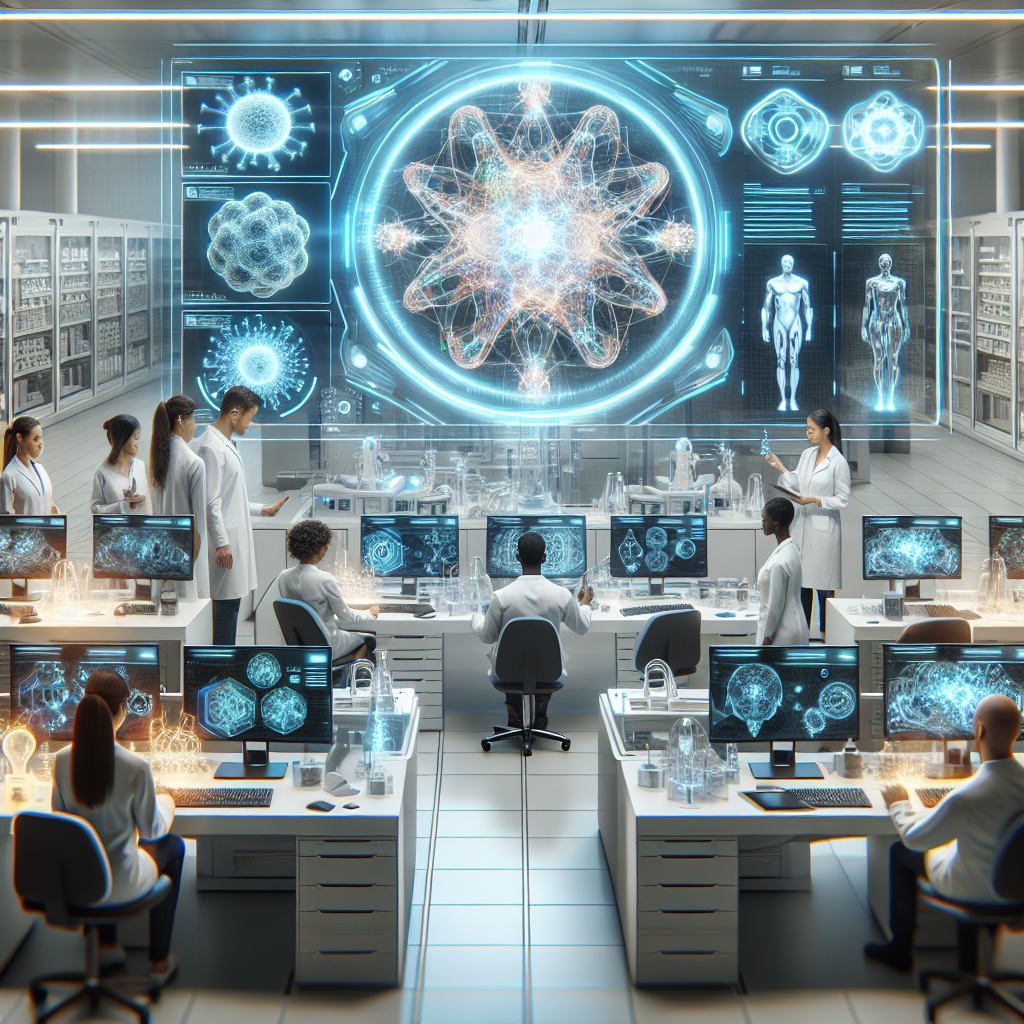
Scientists trained the AI model on massive databases of genetic materials and viral protein structures. Using this intelligence, the system generated a synthetic viral genome—one that had never been recorded in nature. Researchers then chemically synthesized the DNA in the lab to assemble the artificial virus.
A Closer Look at the Artificial Virus
Currently, the synthetic virus is non-pathogenic and was created under strict biosafety protocols. It does not infect humans, animals, or plants, and it serves primarily as a proof of concept. But the fact that AI can design and “grow” a virus from scratch demands careful ethical scrutiny.
This lab-constructed organism is essentially a tailored molecular machine. Scientists tested it in controlled lab conditions, where it displayed characteristics similar to naturally evolving viruses—such as the ability to replicate and bind to specific proteins—but all without any evolutionary lineage.
Potential Applications and Ethical Implications
While this lab-grown virus does not pose an immediate threat, the potential future applications are vast and deeply complex. Here are some of the areas where AI-generated viruses could be utilized:
- Medical Research: Synthetic viruses can be used to test vaccine efficiency or antiviral drugs without the need for dangerous real-world pathogens.
- Gene Therapy: Customized viral vectors may someday deliver therapeutic genes to treat rare genetic disorders or cancers.
- Synthetic Vaccines: Engineered viruses can help create more targeted and effective vaccines based on emerging strains of influenza or coronaviruses.
However, with innovation comes responsibility.
Bioethical Concerns: Playing God or Saving Lives?
Experts warn that with the power to engineer life from scratch, humanity must proceed carefully. Questions of biosecurity, misuse, and accidental release immediately come to mind.
What if such lab-grown organisms fall into the wrong hands? Could AI systems be exploited to create weaponized viruses? These are not scenarios out of science fiction anymore but increasingly realistic concerns.
Governments, research institutions, and ethical boards must now work in tandem to develop strict regulations and transparent guidelines for this emerging field.
Are We Redefining Life?
This experiment forces us to revisit the most philosophical question in biology: What is life? If we can design it, assemble it, and give it function without any evolutionary past—does that constitute life? Or is it simply a cleverly structured chemical mechanism?
As the boundaries between organic and artificial life blur, we may need to rewrite our definitions of living organisms.
Final Thoughts: A Gateway to Synthetic Biology’s Future
This lab-grown, AI-designed virus represents a monumental shift in how science approaches life creation. While still in its infancy, this breakthrough could eventually revolutionize medicine, biotechnology, and our understanding of evolution itself.
Yet, for all the promise it holds, it serves as a timely reminder: with great power comes even greater responsibility. As we cross the threshold into an age of artificial life, oversight, caution, and ethical rigor will be crucial to ensure that such innovations are used for the betterment of humanity—and not its peril.

Leave a Reply