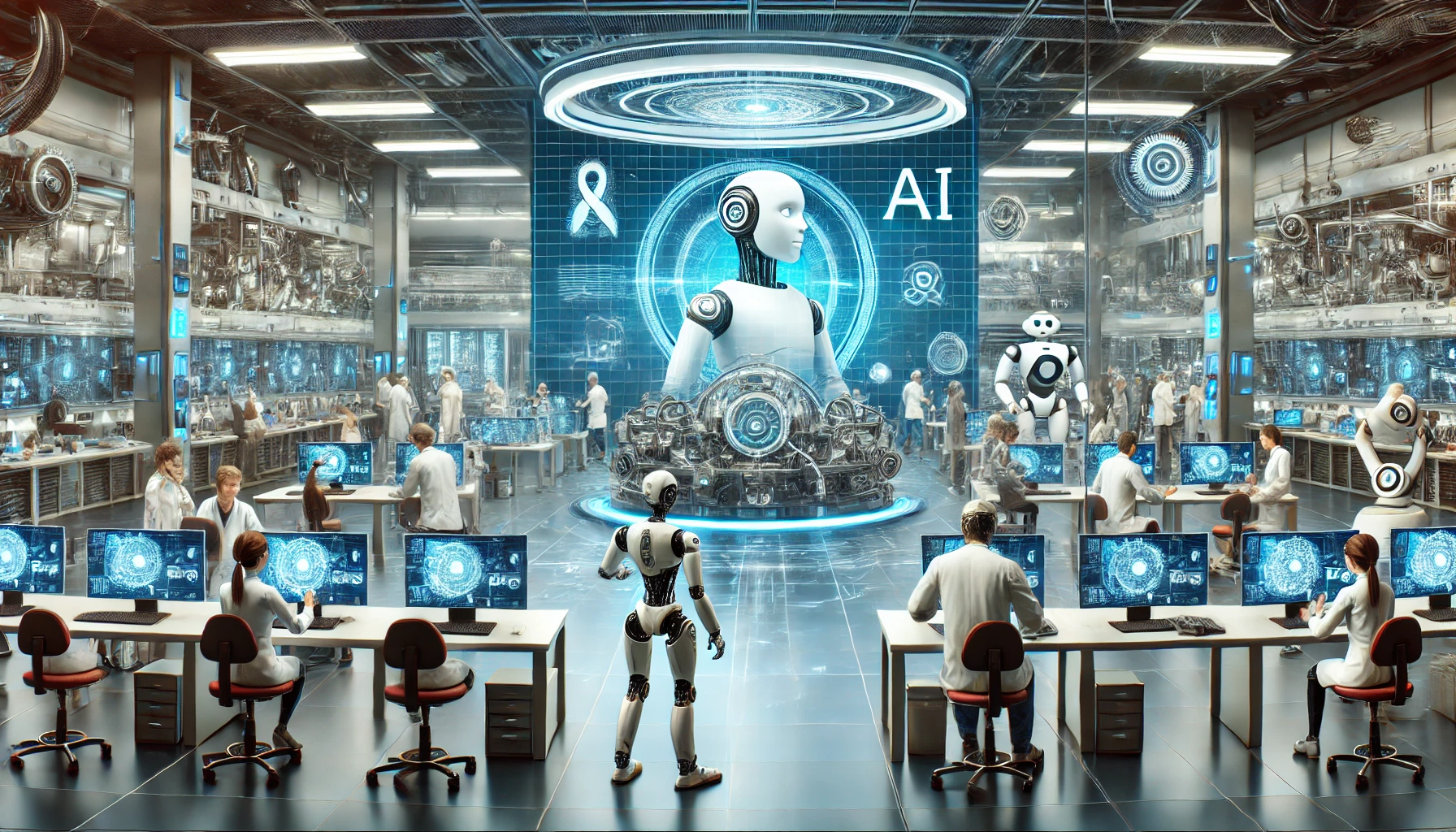

The Blurred Line Between Machine and Mind
As artificial intelligence continues to infiltrate our daily lives, one of the most fascinating—and contentious—questions arises: Can AI possess a personality? With the recent evolution of large language models like OpenAI’s ChatGPT and Google’s Gemini, there’s been a growing perception among users that these AI systems exhibit “personalities.” But what do we really mean when we say that, and what implications does it carry for how we interact with these technologies?
The Illusion of Personality
At first glance, a conversation with ChatGPT or other advanced language models can feel strikingly human. The tone might be inquisitive, empathetic, or even witty. But here’s the critical distinction: what seems like a unique personality is often just a reflection of patterns in training data.
These AI systems do not possess consciousness or emotion. Instead, they generate language by predicting the most statistically likely outcomes based on vast swathes of internet text. So when users say their AI assistant “sounds friendly” or “gets grumpy,” they are anthropomorphizing behavior that is purely algorithmic.
Programmed Personas vs. Organic Individuality
Developers at OpenAI, Anthropic, and Google are increasingly giving AI assistants more defined “personas” to enhance user engagement. Some are deliberately styled to be more formal or factual, while others may adopt a conversational or playful tone.
This personalization raises philosophical and ethical questions:
- Does giving an AI a “personality” enhance trust, or does it risk misleading users?
- Should there be boundaries to how lifelike we make AI systems sound?
These questions are not purely academic. The lines between an AI assistant’s tone and human emotion are confusing to many users, and that confusion has real-world consequences.
The Trust Factor: Empathy vs. Manipulation
AI systems like ChatGPT are becoming increasingly embedded into customer service, healthcare, education, and companionship platforms. With their human-like responses, they can evoke feelings of connection or even intimacy. While this can be beneficial—providing mental health support or alleviating loneliness—it also opens the door to manipulation.
For example, if a user believes the AI “cares,” do they trust its suggestions more easily? When does this shift from helpful guidance to exploitative persuasion?
Regulatory and Design Considerations
To manage these risks, developers and policymakers may need to consider:
- Transparency Requirements: Should AI systems be required to disclose their non-human status regularly within conversation?
- Design Constraints: How “lifelike” is too lifelike when building synthetic personalities?
- User Education: Can users be better informed about how these models operate and the inherent boundaries of their capabilities?
The Role of Cultural and Social Context
Interestingly, perception of AI’s “personality” is often shaped by the user’s own linguistic and cultural background. In different parts of the world, sociolinguistic cues affect how people interpret tone, formality, and warmth in AI interactions. This only adds another layer of complexity to designing AI personalities that are both functional and ethically sound.
Global Personalities or Localized Voices?
Some AI developers are pursuing a “universal” persona—a neutral, helpful assistant style—while others are localizing models to better fit regional expectations. For example, an AI assistant in Japan may be programmed to communicate with greater deference than one designed for the U.S. market.
This duality poses a technical and moral challenge: How much should AI adapt its “personality” to cultural norms, and where should we draw the line in preserving human authenticity?
Looking Ahead: From Tools to Characters
As AI assistants improve their coherence, memory, and context awareness, they may start to resemble fictional characters more than digital tools. In fact, some platforms are now giving users the ability to “create” their own AI companions with specific traits, interests, and communication styles.
This gamification of AI—creating ongoing dialogues with quasi-characters—signals a potential future where AI interactions are less about information retrieval and more about emotional partnership.
The Need for Emotional Boundaries
In such a future, it becomes even more crucial to define emotional boundaries between user and machine. While personality in AI can serve as a bridge for accessibility and user engagement, it must never blur the line so completely that users forget they are interacting with a non-sentient program.
Conclusion: Humane AI, Not Human AI
The emergence of AI personalities is not just a matter of user satisfaction—it’s a profound social and ethical pivot point. While these synthetic personas can enrich our experience, they must be carefully designed to prioritize transparency, trust, and user autonomy.
As we step deeper into the world of conversational AI, the goal shouldn’t be to replicate human traits perfectly, but to infuse AI with humane principles—clarity, honesty, and respect for human agency. The question isn’t just whether AI has a personality. It’s whether we, as humans, handle that perception responsibly.

Leave a Reply