The Rise of AI in the Workplace: A Near-Future Reality
Artificial intelligence is no longer a futuristic concept—it’s rapidly transforming into a tangible presence in the workplace. From customer service to data analysis, AI systems like ChatGPT are proving not only competent but increasingly competitive with human professionals. As explored in The Washington Post’s recent interactive analysis, the capabilities of AI are closing the gap between demo and deployment, raising essential questions about employment, productivity, and the future of work.
Comparative Performance: Human vs. AI
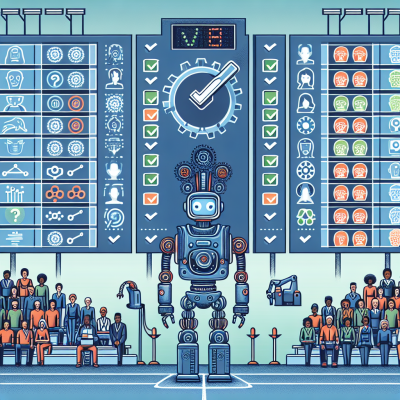
In a striking experiment, The Washington Post compared how AI tools performed against humans on actual workplace assignments. Tasks that once required the nuance, expertise, and decision-making skills of trained professionals are now being competently completed by generative AI models. The findings are a stark reminder: AI isn’t coming for jobs—it’s already here.
Some highlights from the experiment include:
- Customer support tickets resolved by AI were nearly indistinguishable from those handled by human agents.
- Marketing copywriting delivered by ChatGPT matched the tone and effectiveness of seasoned writers.
- Spreadsheet analysis and spreadsheet formulas were executed with precision, sometimes outpacing human efficiency.
While the AI responses weren’t perfect, they were often “good enough” to meet standards—and that’s precisely what makes them so disruptive.
Industries at Risk of Automation
As AI tools sharpen their capabilities, some industries are facing a more immediate threat of disruption. These sectors often involve repeatable patterns, standardized workflows, and heavy documentation—all of which AI handles with ease. The top industries under scrutiny include:
- Customer Support and IT Help Desks – With training on large datasets, AI can provide accurate, always-on assistance.
- Finance and Accounting – From transaction categorization to expense reconciliation, AI handles numbers flawlessly.
- Media and Content Creation – Blogging, social posts, even video scripts are now within AI’s creative reach.
- Legal and Compliance Work – Tasks like contract review and legal research can be significantly sped up by AI tools.
The Human Touch: Still Critical
Despite the impressive performance of AI, many tasks still benefit from a human touch. Creativity, emotional intelligence, complex strategy, and nuanced negotiation remain largely outside the machine’s grasp—for now. Human professionals offer:
- Contextual judgment that AI may not always understand.
- Ethical decision-making based on cultural or personal values.
- Empathy and emotional resonance that machines currently cannot replicate.
As such, rather than seeing an all-or-nothing scenario, the workplace will likely evolve toward a hybrid model—collaboration between human talent and AI efficacy.
The Productivity Paradox
While AI promises to increase productivity, the economic transformation isn’t without tension. A key question remains: Will AI augment jobs or eliminate them? Many employers are already opting to cut roles in favor of automation savings. In fields where cost-cutting pressures are high, it’s likely that AI will directly replace portions of the workforce.
But productivity doesn’t always mean profitability for workers. If AI enables one person to do the work of three, companies may downsize rather than redistribute workload—which puts job stability at risk.
Implications for Workers
Workers of the digital era must consider the following:
- Upskilling is essential – Learning to work with AI, not against it, will secure your career path.
- Adaptability matters – Those open to change and learning new technologies will thrive.
- Soft skills are increasingly valuable – As machines take over tasks, the ability to connect, lead, and innovate will stand out.
AI as a Co-Worker, Not a Competitor
Despite concerns, there’s another narrative taking shape—one of opportunity. As AI masters repetitive or time-consuming tasks, professionals are freed to engage in strategic and creative endeavors. Think of AI as your tireless digital assistant:
- Writers can brainstorm faster and refine drafts more easily.
- Analysts can crunch larger datasets to extract better insights.
- Project managers can automate updates and progress reporting, focusing instead on leadership.
The key lies in reframing the conversation. AI isn’t just replacing jobs—it’s redefining them.
Conclusion: The AI Evolution Is Accelerating
As the research from The Washington Post illustrates, AI is no longer playing a supporting role in the workplace—it’s ready for the spotlight. While some jobs may be automated away, many more will be transformed. The challenge isn’t to resist automation. The challenge is to adapt, evolve, and collaborate with AI to remain indispensable in a rapidly changing world.
The future belongs not just to those who work hard—but to those who work smart, alongside the intelligent machines reshaping our world.

Leave a Reply