
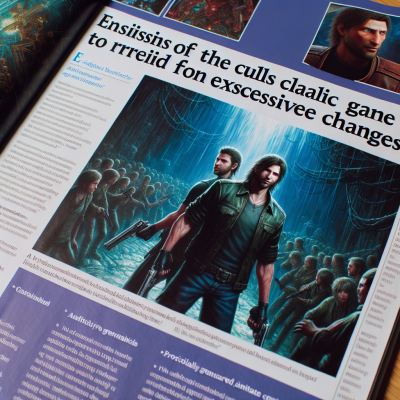
Let It Die: Inferno Embraces Generative AI for Artistic Innovation
The horror-action game Let It Die: Inferno is stepping into new creative territory by integrating generative AI in the development of its in-game content. Developer GungHo Online Entertainment has revealed that several visual and audio design elements were created using AI tools, showcasing a blend of technology and artistry that is pushing the boundaries of game development.
AI in Game Development: A Bold New Chapter
As generative AI revolutionizes industries from marketing to filmmaking, the gaming world is starting to harness its potential. In Let It Die: Inferno, AI technologies weren’t used just for minor tweaks — they played a fundamental role in building immersive game elements, from environmental visuals to soundscapes.
According to the team, generative AI was used to create:
- Background signboard textures
- Record illustrations
- InfoCast (in-game information) videos
- Voice acting
- Music composition
Each of these contributions enhances various aspects of the game’s presentation, immersion, and atmosphere.
Visual Worldbuilding Powered by AI
One of the standout uses of AI in Let It Die: Inferno lies in its environmental design. AI was employed to generate background signboard textures, giving the game’s world a gritty, post-apocalyptic aesthetic that feels both handcrafted and surreal. The generative process allowed artists to explore unique motifs and signage that might have been too costly or time-consuming to create manually.
In addition, AI-created record illustrations add another layer of visual storytelling. These stylized assets likely draw from a vast dataset of album covers and abstract artworks, resulting in dystopian looks that tie in with the game’s overall mood.
Dynamic InfoCast Videos: A New Style of Storytelling
The game’s in-world news or update mechanism, referred to as InfoCast videos, also received an AI-led overhaul. These short video segments, typically designed to convey lore or updates in a stylized format, were generated partially with AI. This not only streamlines content production but allows developers to rapidly iterate and adapt narratives with a cinematic flair.
AI-Driven Voice Acting and Music: The Sound of Innovation
Perhaps most striking is the use of generative AI for both voice acting and music composition. While synthetic voices aren’t unheard of in games or media today, their increasing sophistication makes them more viable than ever for immersive experiences. Whether it’s the ghostly wail of a digital specter or a mysterious NPC’s monologue, AI-generated voices add a futuristic touch to the game’s presentation.
On the musical side, AI-generated tracks range from atmospheric synth patterns to pulse-pounding action themes. By shifting some of the audio design burden to generative systems, the developers were able to create a sonically rich world without compromising on speed or budget.
Blending Human and Machine Creativity
Despite AI’s involvement, it’s essential to note that Let It Die: Inferno isn’t fully machine-made. Instead, GungHo Online saw generative AI as a collaborative tool — one that compliments rather than replaces traditional artistry. Developers and designers still oversee, curate, and refine the AI output, ensuring it matches the desired tone, style, and sensibility of the overall game.
This hybrid approach reflects a growing philosophy in the creative industries: AI is a powerful assistant, not a substitute.
The Future of AI in Gaming
With Let It Die: Inferno, GungHo Online Entertainment joins a growing list of developers experimenting with AI-enhanced workflows. As tools evolve, we can expect more studios to incorporate generative AI in worldbuilding, storytelling, sound design, and more.
However, the integration of AI also raises questions about originality, authorship, and the role of human creatives. As the gaming industry continues to explore how best to balance automation with artistry, Let It Die: Inferno stands as an early example of what this collaboration can yield.
Final Thoughts
Let It Die: Inferno showcases how generative AI can be used responsibly and creatively in game development. From eye-catching textures and stylized voiceovers to immersive music and video segments, the game’s use of AI marks a forward-thinking step in digital art and design. As generative tools continue to advance, they are set to become a mainstay in the evolving landscape of video game creation.
For players, that means more distinct experiences, faster releases, and games that push the boundaries of creative expression. As AI continues to be refined, the line between human and machine-made content will blur — and that may not be such a bad thing after all.

Leave a Reply